Countermarked Coins as Evidence of Emergency Monetary Intervention
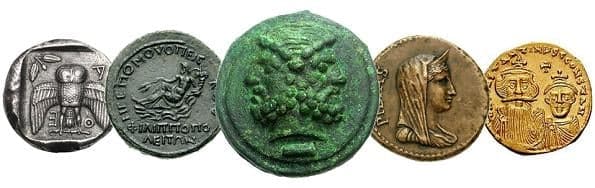
Some coins carry marks that were never part of their original design.Stamped symbols. Overstruck emblems. Validation punches.
These countermarks often appear during periods of political disruption, fiscal crisis, regime change, or monetary instability. They are usually described as administrative artifacts. But their timing and scale suggest a deeper role.
This leads to a hypothesis: countermarks represent emergency monetary intervention when states lack the capacity for full recoinage.
Re minting an entire currency supply requires metal, labor, infrastructure, time, and political stability. During crisis, those resources are scarce. Countermarking allows authorities to rapidly reauthorize circulating money without withdrawing it.
It functions like a monetary patch.
By stamping coins already in circulation, a state can reaffirm legitimacy, alter denominational meaning, enforce new authority, or stabilize confidence without rebuilding the currency system from scratch.
A surge in countermarked coins likely signals fiscal strain, legitimacy crisis, or administrative urgency. Instead of recalling currency, rulers rewrite meaning directly onto metal.
Countermarks also reveal which coins retained public trust. Governments countermark money people already accept, implying that credibility often resides in circulation habits rather than political decree.
Tracking countermark frequency over time could therefore serve as a proxy for how often states faced emergency monetary stress.
In effect, countermarks become timestamps of crisis.
They record moments when governments lacked the luxury of slow reform and instead resorted to rapid symbolic intervention. They also show how monetary systems adapt under pressure, using speed rather than perfection to preserve economic continuity.
A countermark is not decorative.It is policy executed in metal under constraint.
Coins with stamps are not damaged.They are evidence of emergency governance.