Overstruck Coins as Evidence of Regime Shock and Monetary Panic
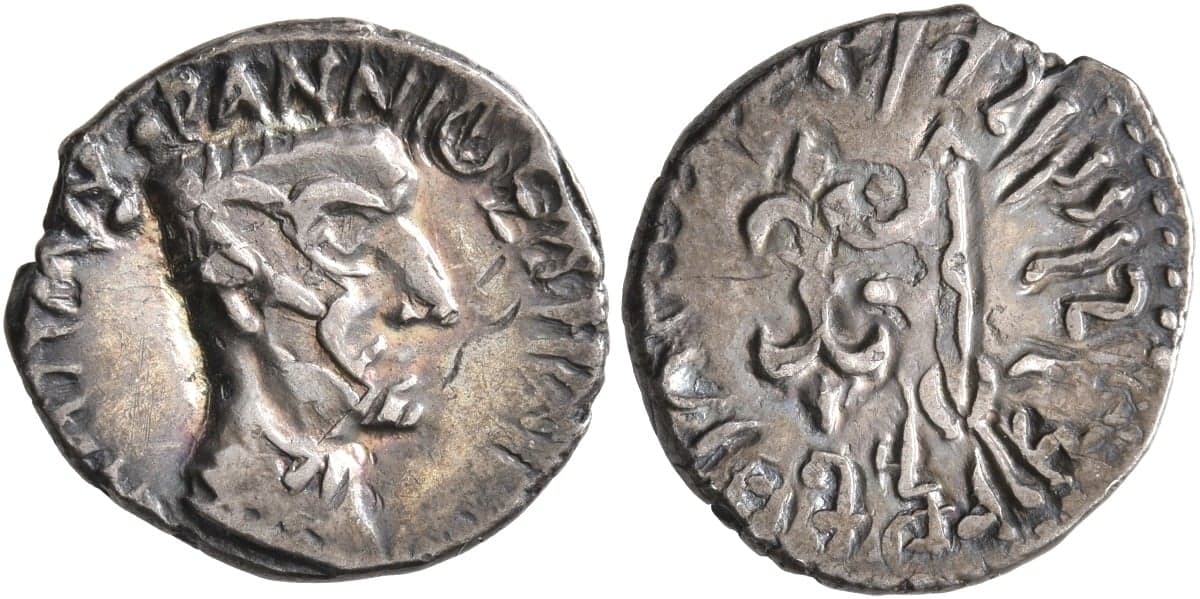
Some coins carry ghosts of earlier rulers beneath their surface.
When you study overstruck coins, you often notice faint remnants of earlier designs lingering beneath newer ones. A previous emperor’s portrait partially visible under a fresh face. Old inscriptions ghosting through new titles. These traces are not artistic accidents. They are economic and political responses to disruption.
This leads to a hypothesis: a rise in overstruck coinage reflects periods of regime shock and monetary panic, where states prioritize speed and legitimacy over stability and perfection.
Overstriking is a choice shaped by urgency. Minting new coins from raw metal requires time, infrastructure, labor, and fiscal capacity. Overstriking existing coins allows governments to rapidly assert authority without withdrawing currency from circulation. The faster the political transition or financial emergency, the more attractive this shortcut becomes.
The Roman Empire offers a clear historical example. During the Year of the Five Emperors in 193 CE, political power shifted rapidly between rival claimants. Instead of recalling older coinage, new rulers overstruck existing coins to replace imperial imagery as quickly as possible. Money became a battlefield of legitimacy, with each regime racing to place its authority onto circulating currency.
A similar pattern appears during the Crisis of the Third Century, when rapid leadership turnover and military instability forced emperors to reuse older coins. Overstriking functioned as both economic necessity and political messaging. The priority was not producing perfect money, but ensuring that money visually aligned with whoever claimed power.
The Byzantine Empire provides another example. During periods of territorial loss or fiscal pressure, older bronze and copper coins were frequently overstruck rather than reminted. This reflected both metal scarcity and administrative urgency. Reissuing coins from scratch would have required resources the state no longer controlled.
In medieval Europe, overstrikes surged during moments of conquest and dynastic replacement. When William the Conqueror consolidated power in England, coin designs shifted rapidly, and older dies were repurposed to accelerate monetary transition. Coins again served as instruments of political stabilization rather than purely economic tools.
What unites these cases is speed under pressure.
Overstriking allows regimes to preserve transactional continuity while rewriting authority. Instead of withdrawing money and risking economic paralysis, rulers overwrite meaning directly onto existing coins. This keeps markets functioning even as power changes hands.
Overstruck coins therefore become timestamps of instability.A sudden increase in overstrikes suggests contested succession, territorial upheaval, fiscal exhaustion, or collapsing administrative capacity. The metal itself records moments when governments lacked the luxury of slow reform.
There is also a psychological dimension. Money anchors public confidence. When leadership changes abruptly, people fear disruption. Overstriking reassures users that currency remains valid even if rulers change. It acts as visual continuity during political rupture.
Coins in this context are not passive objects.They are emergency tools of governance.
An overstruck coin does not simply represent reuse.It represents authority rewritten under stress, legitimacy repaired in haste, and monetary order preserved during chaos.
Coins do not just record who ruled.They record how urgently power needed to prove itself.